Pages

Showing posts with label learning. Show all posts

Tuesday, 24 February 2015

Developing life-long learner skills

How do you become a life-long learner?  I was qualified and worked for some time as a microbiologist.  I then married someone who lived in the middle of nowhere and there were no jobs for microbiologists within a 100 mile radius.  But the local secondary school needed chemistry and science teachers, and so, I entered the teaching profession, without any training and I learned how to teach on the job.
This set me up for a lifetime of learning on the job.  My skills developed through need and, of course, I was putting in effort along the way.  As a chemistry and maths teacher, I kept thinking about better ways to teach the students, and attended professional development opportunities to help me improve.
I had previously thought that getting a degree in microbiology (and a post graduate diploma) would set me up for my working life, and that was all that I would need to be the most invaluable microbiologist in New Zealand.  I look back shamefacedly at that notion! Little did I know that knowledge was expanding at an exponential rate and whatever I knew back then, would be well out of date in five years.
As I moved into a senior management role at my school, the job description changed even more and now also included presenting and working with the staff.  As a classroom teacher, I had seen the development of the internet and digital technologies in education as opening up a whole new world for me and my students.  I started reading, watching and listening to as much as I could, and more importantly, started searching the internet for strategies using digital technology skills so that I could engage my students and deepen their learning.
 I looked for the "just in time" professional knowledge rather than the "just in case"  because there was so much to learn, it would have been overwhelming otherwise.  And so began the next stage in my learning journey. The age of the confident, connected, actively involved, lifelong learner had arrived.  I am confident because I know that the knowledge that I need is out there in the ethernet.  I am connected because I have expertise at my fingertips, and have professional learning networks I can tap into 24/7.  I am actively involved because I seek out new learning myself as I need it and give that learning back, whenever and wherever I see the opportunity. I am a lifelong learner because the journey never stops.

 I don't tell you this story to celebrate my success as a learner.  I tell you this story so that you can think about your own journey and how you become a lifelong learner so that your professional expertise is based on your own wants and needs in a changing world.  And I also tell you this story because your students need to know and understand it, as they enter a rapidly changing world.

The internet has changed the playing field for everyone.  So much knowledge and learning available for all.  If I want to learn how to copy and paste, I just google "how to copy and paste".  If I want to make a podcast, I just google "how to make a podcast".  There are instructional videos about everything and anything on youtube.  You can find out anything "just in time".  And that knowledge may be redundant in a years time, so be prepared for change.  Never have Heraclitus's words been more true - “Change is the only constant in life.”


Sunday, 4 January 2015

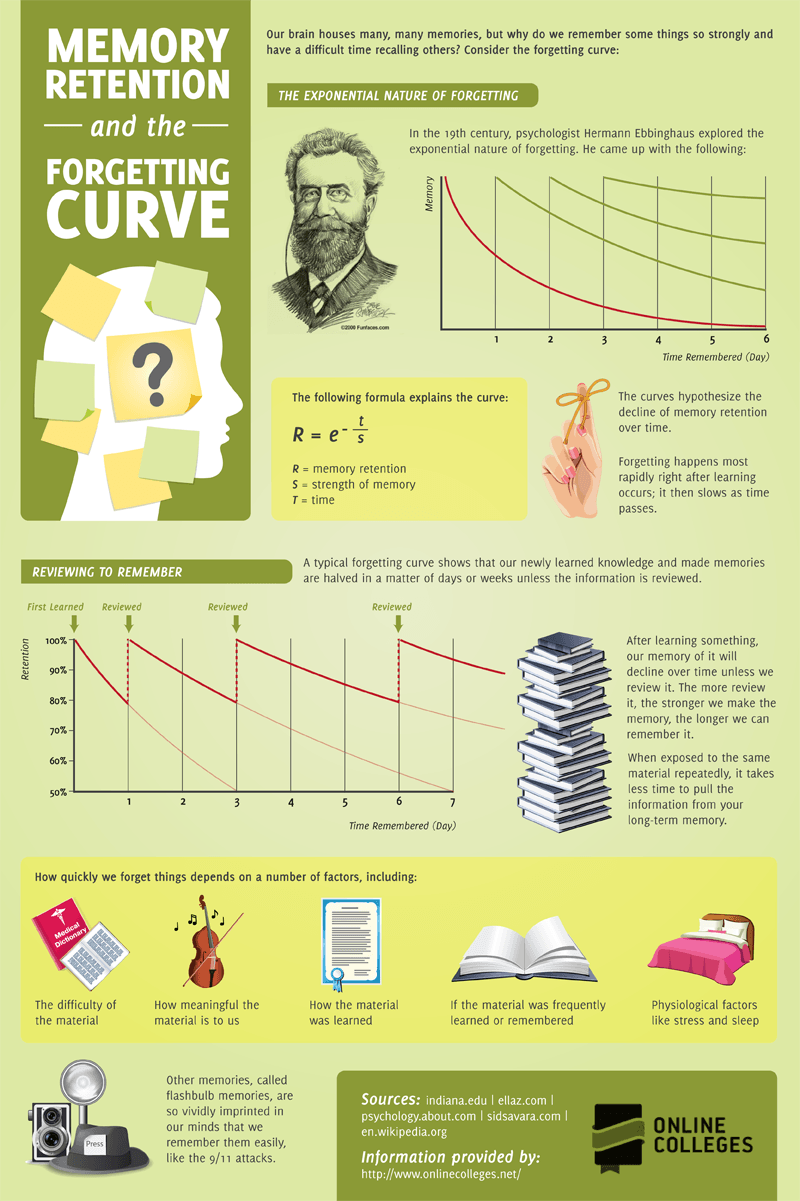
A great infographic from e-learning infographics which explains why flipping your class really works.

This great infographic reminds us of the importance of reviewing what we learn to be able to commit it to memory. This totally explains to me why videos are so good at helping us learn. We can stop, pause rewind, review a video, at our own pace. No teacher interruptions. If we have a video stored in a central place like on a site, this adds to the benefit as we are able to review regularly. Enjoy! Memory-Retention-and-the-Forgetting-Curve-Infographic
Find more education infographics on e-Learning Infographics

Tuesday, 4 November 2014

In my perfect class

I have been out of secondary teaching for two years now after 33 years.   I loved teaching, and of course, my practice had changed a lot over the 33 years but the rate of change in the last 10 years had suddenly increased and was continuing to grow exponentially.  Why?  Because I found digital technology and new, exciting, more engaging ways to do things.
I often wonder what it would be like to be back in a class again on a permanent basis. Even in the two years that I left, I have thought about so many new ways for me to try to improve student outcomes.  I think about the students I have failed in the past and "what if things were different."    How could I meet every student's needs? How could I design a course with UDL guidelines to the fore.
I have a friend coming over today.  She wants to know how she can rethink her classroom into a modern learning environment.  It is not just the environment that is important, - it is the modern pedagogy.  So I need to start asking questions.
How do I allow students to collaborate, create and connect with others?
How do I make the learning relevant to them?
How do I build on the relationships that I forge with them?
How do I teach them to learn?
I must design my classroom for learning, for inquiry and for discovery but not forget the qualifications that they are moving towards. So now it comes down to the practical stuff.  My friend's school has a newly acquired Google Apps For Education platform to work with so this is the chance for me to say how I would use it in my perfect imaginary class.

Screenshot 2014-04-30 at 3.35.12 PM.png
In the beginning:
First of all, my students would all have a device through which they could access GAFE.  I would use Google Classroom to  push out the daily instructions to my students.  I would initially get to know my students by using Google Forms and getting them to fill in some information about themselves, including asking them to identify anything about what helps them learn and what stops them from learning that they would like me to know.  Information about themselves would include where they have come from, what school they went to, who their close friends are, how they see themselves as a learner and what they needed from me.
Every student would be introduced to their Google account, and their own Drive with unlimited storage for all of the files that they may have gathered over the course of their schooling years.  They would learn how to share and collaborate with teachers and other students.
My students would initially collaborate on a class Google Presentation and make a slide each for someone else in the class.  It could be a friend, or someone they feel safe with and I could model that by making a slide about myself and perhaps even another student.  It would include a photo and a "flavour" or style that the other student was happy to be identified with.  These two things along will help me lay the foundation for positive relationships with my students.
Along with those two things, would be a brainstorm on good citizenship including digital citizenship on Google Draw from which we could elicit our own class rules together on a Google Doc.  This would be referred to and modified throughout the year as circumstances arose.

During the year
A Google Site would be where I placed a lot of resources and activities for the class.  There would be a Google Calendar on the front page which would inform the students of any crucial dates and class wide assessments that were due.  Students would also have their personal calendars into which they could add the class calendar.
Other pages on the site would contain resources organised into content and assessment pages. Students could choose what content and assessments they wanted to learn about.  The learning outcomes would be clearly identified.  There would be instructional videos, and resource videos as well as written, image and audio resources to account for different preferences. Practical sessions would also be explained though video, and the students would be able to access the resources that they needed to do the practical work through information on where and how they could find them.  Access to formative assessment would be through the site.

 Every day I would have a video or image to start the whole class thinking and group discussion. This may or may not be relevant to the main body of the individual student work.  I would choose appropriate images from "The Big Picture"  for example, or "Ted" talks as prompts.   There might be associated activities which could lead the students into deeper thinking about the matter at hand and these could be on a Form or a shared Document, but could also make use of a number of apps, add-ons and extensions for Google.  Class discussion would be essential.

Work in the class would be differentiated and individualised through the affordances of technology. To some extent, choosing my subject has already allowed for some personalisation of study.  The contexts in which they studied different aspects of my course could be chosen by them as often as possible.  My students could work in groups but would not be streamed on ability.  They would create Forms to test their group members on what they needed to know for assessments.  They would also create presentations, videos and sites to showcase their work, so that others in the class could learn from their work.   Some students may prefer to work alone but they would be required to share their learning later with others in the group.
Students would work collaboratively on constructing their knowledge.  I would expect the students to do a lot of creating resources themselves for example, I would expect them to create their own Sites. There would be time for the presentation of their work to the class.  They would learn to be construcively critical of their own and others work by asking for feedback.  I would collect feedback from them on their learning experiences and what worked best for them.
Links to work that was submitted for assessment would also come to me through Google Forms or perhaps I would use Google Classroom.

Outside the classroom: 
Students would have access to all of the resources and work 24/7. For homework, I would expect the student to use Blogger to report about and  reflect on what they have learned and to embed videos, images, voice recordings and links to which they could refer back to their own work when it came time to revise for assessments.  The new blog posts would be submitted to me using a Google Form so I could regularly check that the work was being completed. Their blogs would also be linked in to the class blog which students could have turns at writing, along with myself as the overseer of the class blog.  The class blog would be a multimedia affair - images, videos, embedded apps.  Students could use their own phones to collect images or borrow the class camera and upload to their Drive and share if need be, or they could use the class ipods.  I would write comments on their blogs and other students would also do the same.  Students would invite feedback from their parents and well beyond classroom or even country borders.  The blogs could also serve as eportfolios.
Parents and whanau could access the blogs and the class site so that they could be involved in their child's progress.  There would be no surprises as there were sometimes on parent teacher night because the progress on assessments would be available on the student mangement system portal as well.
Other connections would be made to the parents using gmail, google docs (newsletters) and google forms,  for example consulting and collecting relevant feedback from the forms onto spreadsheets.

As I wrote this blog, the enormity of the teacher's job hit me.  There is so much that I could do to teach my students how to learn.  In the end, there are only so many waking and working hours that you have.  A teacher's job is never done.  Organising the class needs to start one step at a time.

I wonder if I will ever go back into the classroom to try this out?

Monday, 3 November 2014

What is the most important thing?

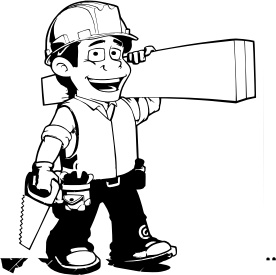
I have a great builder.
He can visualise what can go into a space to make it more beautiful, and he crafts and builds with skill and accuracy.  He is also dyslexic.  This means that he doesn't read my emails very easily and I have difficulty understanding what he means when he replies to my emails. So, I have learned through experience (and finding out about his dyslexia from his offsider plumber) that it is best to phone him and/or talk to him face to face.  He has a successful business, is always busy, keeps to his spoken schedule and is genuinely a nice man.
Why am I telling you about my builder?  Well, at school I believe he would have struggled to meet the literacy standards of the day.  And therein lies my problem with the obsession with measuring literacy and numeracy standards across the country, and I suspect, across many countries' education systems.
Unfortunately, I think much of this focus on meeting national standards is driven by the idea that people must be literate and numerate to be able to succeed in life.
Is this paradigm is driven by the people who are in business in high places right now?  Outmoded education systems were built for the Industrial Age, and we must start to prepare our students for an unknown future.  It is, however, apparently still very hard for some schools, some teachers and some parents to make the shift to a more personalised, future focused education for children.
I think that very often, parents support and perpetuate the old system of education.  They seem to want to be educated the way that they were educated.  You hear these phrases often: -

  • You should get back to basics.  
  • Focus on the three Rs.  
  • You are not getting enough homework
  • The teacher knows everything you need to know
  • You just need more discipline slash respect
I do understand how literacy and numeracy are important for many real life situations.  But they are not the most important thing.  The most important thing is that success will come from focusing on learning through and about what interests you. Teach yourself how to learn, how you learn best and seek help as and when you need it.  
I believe that technology opens up a number of different pathways to success.  My builder uses an ipad to help visualise the project, along with his own notes which may not be very comprehensible to others.  It works for him.  There are a whole bunch of successful creative people out there who do not need to know when to use particular punctuation, or know the difference between an adverb and an adjective.  Instead they have learned to improve, how to strive for improvements, how to learn and often they have had a supportive mentor, a guide on the side, a teacher, partner or parent who has encouraged them to go further, or even keep going when others would have given up.
So in your quest for success, always remember these important things.
  • Be prepared for failures.  
  • Be prepared to unlearn what you may have learned in the past. 
  • Be prepared to adapt.
  • Be prepared to work on improving.
This way you will find your own niche in life.
 

Image sourced from openclipart 

Monday, 20 October 2014

Using Google Apps for Education as a Learning Management System

A friend (secondary school teacher) wants to migrate from using Moodle as a learning managment system to GAFE. I am trying to think of ways that will make the transition painless, and also engaging and visually stimulating for the students. The school has effectively dropped access to Moodle and has moved to being a GAFE school.
So what are the main components of GAFE?  

  • Drive (storage and also the applications of docs, sheets, slides, drawings, and forms)
  • Blogger 
  • Sites 
  • Youtube 
  • Gmail 
  • Google Class 
  • Maps 
  • Calendar
  • Google + including Hangouts

Each of these components can be integrated with each other easily and there is a single sign on.

Google Drive is a great place to store and organise resources, documents, images and many different files and, with the added bonus of unlimited storage for GAFE school students and teachers, Google has effectively wiped the floor of other LMS's. As I see it, Google Class is the place to start in getting "the work" to students. I also think that Google Blogger could work in the same way, with the newest information on top, and it could be a lot more visually appealing. You see, you can embed videos into Blogger and students respond quickly to that stimulus.
Maybe she is better to work with a Google Site as that can really be made very attractive and a site can deliver the year's curricular content as a fait accompli for students to refer to as they need to complete assessments. I can also see Google Slides being a great way to present instructions and or content. Google+ groups would be great for her students (who are mainly over 13 years old) but Google Class allows students to submit completed work easily.  I do think that Google Forms can be used effectively for work submission (through sending the link to the work) as well.
There are so many tools available in GAFE, each with so much potential to do many different jobs for us. I also think I am maybe looking at this the wrong way. What if the students were involved in the design of her new course? It is so beneficial for students to create content and thereby create their own knowledge. The difficulty here could be that much of their year would be focused on learning to use the tools instead of the knowledge that they need for their NCEA assessments. I have a reasonable knowledge of all the Google tools available so it would be pretty easy for me to mix them up a bit, but for a beginner like my friend, there is a lot of learning to be done in all tools.
 This is my big picture thinking: Take a google site, build resources around all of the "must knows" on the site. Use Google Class to address day to day "what to do".  The calendar can be used to attach assignment work and give due dates.  Require students to write blogs on Blogger which reflect on what they have learned each lesson and check for learning. Ask students to demonstrate knowledge creation on Slides and Drawings.  Use Forms to gather feedback, formative and summative assessment.  Hangouts make great ways to break down the walls of the classroom.
Now, as well as that there are thousands of apps, addons and extensions that work with Google, but I think I will leave that lesson for another day.
Any other feedback and advice would be greatly appreciated.

Saturday, 11 October 2014

Ulearn14 conference was different for me this year because of tweeting

I have been going to Ulearns for a few years now, not all ten that have been held, but quite a few of them.  I really feel like I got a lot more out of ULearn this year.  I think the reason was that I tweeted a lot.  I decided that instead of making notes that I lose or get hopelessly out of order, I would try and record keynotes and workshops by taking photos of slides and writing 140 character tweets on what I was hearing.
And as a result, my tweets got retweeted and I made connections with other educators that I have not met.  If someone retweeted, then I made sure I followed that person, too, and in the evenings, as I sat alone with my miserable head cold and recapped the day, I looked through the tweets and remembered a lot more that what I would normally have done, and felt connected.
Visuals make all the difference, and so does the fact that you have an authentic audience. In addition, if you use "Storify", you can get all the relevant tweets up in order and make comments as you go.  I didnt have time for that just yet but it is something I will do.
As well as that, I was able to use Tweetdeck on my laptop to manage to review the tweets of the day with the hashtags #ulearn14.
So I have been slow to get on board with tweeting, as I felt that I had all the extra external contact I needed through Feedly and Diigo, but it did make my whole Ulearn experience much better: -  more useful and more memorable and more recollectable and more connected.
As I look over the tweets this morning, my favouriteimage of the day so far is one that came from an overseas tweeter @shirljud1 who retweeted a tweet that I made about someone at the conference.  Rings true on many planes.

Twitter, I made a mistake about you.  There is a place for you in my life.

Wednesday, 8 October 2014

Today was all good.


Media previewMedia preview


My four main learnings today came from
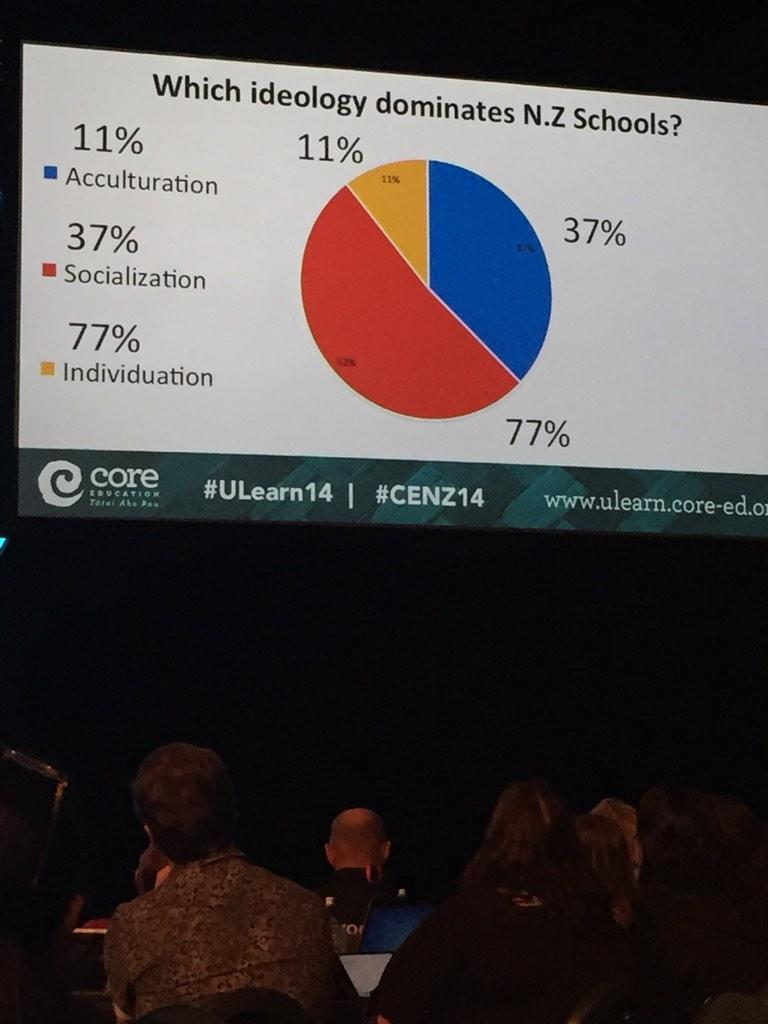
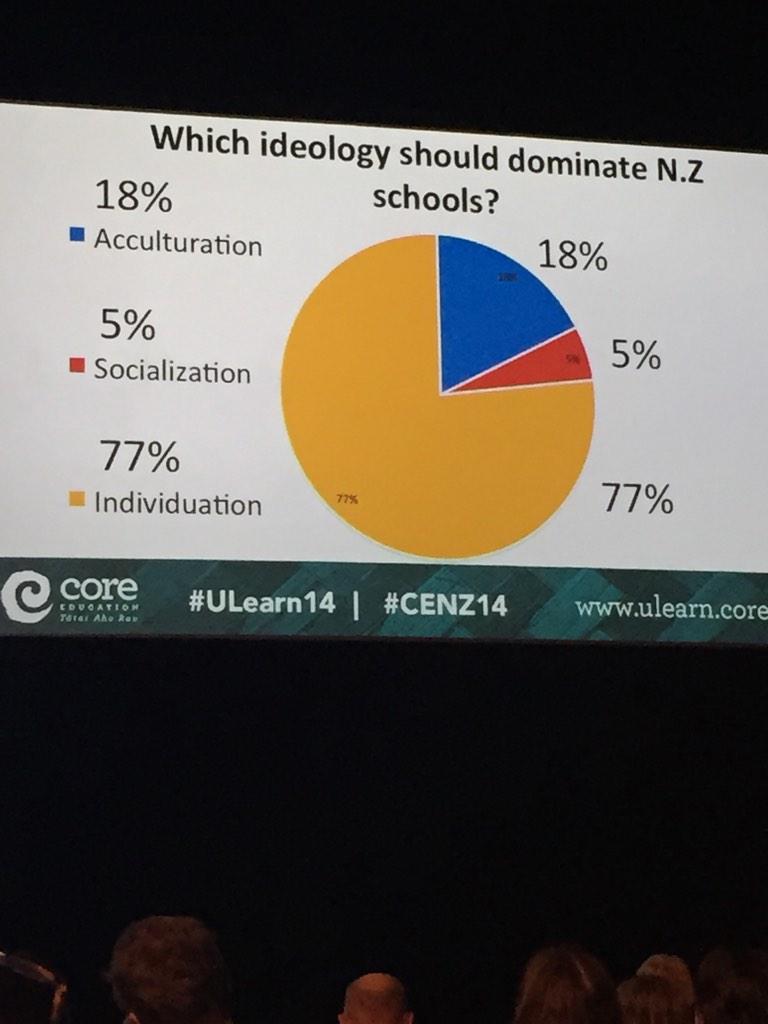
  • Keynote speaker ( Joram Harpez) - that we must choose an educational ideology.  Must we?  I am still not sure.  Of course the individuation was my choice, but I am not sure that socialisation and acculturation cannot be integrated into the model as well.  I might have to read more!  
  • How do we learn? Mark Treadwell presenting.  Revisiting his work was a real treat for me.  Must read more!  
  • Google Fest a group collaboration on SAMR then a grand slam.  Fun.  Too many people.
  • Keynote speaker. (Adam Lefstein) Enjoyable look at professional discourse and conversations. Great advice but not sure about the good professional discourse from Israel shown as an example.  I thought the principal lacked vision in his conversation.  I also thought his approach was all wrong - it was quite "superior" and not collegial or collaborative in tone.  The conversation was about the "what" and "how", not the "why".  Perhaps I need to read more. 
Big picture learning: the over-whelming number of participants are primary school teachers - do we need a secondary school focus or stream for the next Ulearn?  What is happening in secondary schools?  Can we have a 50:50 turn out next year on primary to secondary?
Yes, I will give feedback.

The meeting up with people was great.  Awesome catchup with friends and foes.  


Saturday, 4 October 2014

Some ideas aound flipping your class (or at least the learning.)

The Free Technology for Teachers guru, Richard Byrne, is amazing!  He has a way of quickly reviewing and aligning the functionality of different digital technologies to different educational settings and assessing their usefulness.  He is a must to follow - I have been since about 2009 -  and he never ceases to amaze me with the sheer variety of technologies but more importantly, his clear statements about how he thinks they could be useful in the classroom.

Recently, he has reveiwed 7 tools to use in one of my favourite pedagogies - flipping the learning.  By co-incidence, I also talked to a journalist about flipping.  There seems to be a surge of interest in flipping in New Zealand. Flipping, of course, has evolved so much since the first years when Aaron Sams and Jonathon Bergmann started videoing their Woodland Park, Colorado lessons and posting them online so that students who had been absent through illness or school- based activities could catch up.  They found that all of their students started using the videos for their own learning.

Sams and Bergman started to get the students to watch the videos at home first and then come back to them with any questions the next day at school.  As a result, their lessons evolved into interactive, student centred learning rather than teacher led "lectures. Nowadays the two recommend short videos that engage the students easily, to be watched in their own time.   This approaches a more personalised learning paradigm, or at least an individualised one.

As you start to make the move towards personalised learning in your classes, consider a flipped approach.  It is important that you make use of the relationship that you have with your students to connect with them through video.  Video is a powerful and engaging medium. The flipped learning network is a useful organisation to belong to. They have come up with a great explanation of what they believe flipped learning to be, and an easy to remember mnemonic (FLIP) which characterises the concept.

I am about to run a workshop on Flipping the Learning using Google Apps - it might be worth a look at the slides if you have an interest in  trying flipping out.  I am happy to field questions about this important pedagogical approach.  Happy to help you walk this way.

Have a happy Connected Educator month!


Thursday, 25 September 2014

What do we know about learning?

I can't say enough how much I value the work of researchers, Bolstad and Gilbert et al who wrote the report for the Ministry of Education on "Supporting future oriented learning and teaching".
The report focuses on a vision for New Zealand learning and what transformation of education could look like for New Zealand.  In some schools, the transformation has begun.  We need to focus on the six themes of future oriented learning and teaching to undergo the transformation.
They are personalised learning, new views of equity and diversity, new connections to the community (local, national and international) using knowledge to build learning power, lifelong learning for leaders and educators, and new roles for teachers and learners.  Another earlier blogpost refers to these themes.

My mind keeps wandering back to page 15, table 3 in the report.  "What we know about learning." The table heading is a statement, not a question.   In other words, this is what we know about learning from the research.
I think the table provides a great basis for a  reflective tool to check out how we as teachers are supporting learning.  I have made up a form (see below) based on the table so you can do a self review.

  • It would be great if you could answer all ten questions.  That would allow you, and other teachers to view your responses.  
  • This form is completely anonymous and I see it as a way to think about the learning that is going on in your class, and learn from others as well.  
  • You are able to edit your responses.

If you are the first person here, go on, fill it out and allow others to learn from you, as well as reviewing your own performance as a teacher.
You are also welcome to make a copy of the form to use in your schools.  Make a copy of the form here by going the the menu "File" and choosing "Make a copy"  (You will need your own Google (free) account to do this).
The responses can be viewed at this link (which is also available at the end of the form)
For those of you who do not want to complete the form: here are the ten questions:
Are students in my class thinking?  How do I know this?
Am I providing experiences to draw on? Examples of this are?
Am I supporting my students to build deeper knowledge by searching for different approaches to answers?  An example of when I have not “given the right answer” is...
Are my students actively engaged in processing new knowledge (is there a task which required them to engage and interpret the new knowledge?)  The new knowledge is ….  The task is ….
Do my students want to learn this material?  How do I know this?  Is it relevant to them is there another way of learning the material which makes it more relevant?
Do my students have control over the pace and goals of the learning?  I have given choice to them when …..  The students can go back to the learning at …...time.
Is there structure to the learning? When students are ready for the learning, have I resources and learning management systems that allow them to do this?
Does the learning involve interaction with others? Do my students work with each other to create new learning?  What evidence do I have of learning that happens with people other than myself?  Do I enable connections for interactions to happen?
Does learning happen outside the classroom and do I acknowledge it, and plan for it?  In what ways have I enabled learning outside the classroom?
How do I expand the intelligence of each of my students?  Can I demonstrate ways in which learning has happened for students who thought they were “no good” at something?