Pages

Sunday, 27 November 2016

A Tool to Reflect on The Seven Principles of Learning in Your Class

The OECD brought out a practitioners guide to innovative learning environments called The Nature of Learning.  In it, the Seven Principles of Learning are outlined, and these are based on research on how we learn.
We should use these principles to guide the development of the environment in which we learn.  In other words, as teachers we should be using these principles in our classrooms.
Briefly the principles are centred around:
  • learners being at the centre
  • the social nature of learning
  • emotions are integral to learning
  • recognising individual differences
  • stretching all students
  • assessment for learning
  • building horizontal connections.
I can talk about each of these things to my hearts content but I think it will be more relevant for you if you examine your own practice through these eyes.  So instead I have prepared a document for you to make a copy of and fill in yourself.  This self review document could make a discussion point for end-of-year staff meetings or even beginning-of-year staff meetings, for appraisal, deciding on inquiry or practicing teacher criteria self reflection.

You could add another column - what do my peers say? Linked to the sheet (in the top left hand corner) are a few ideas of what each of these principles mean to me.  Please add comments to the explanations, if you wish - I hope you find both documents useful.

Saturday, 12 November 2016

Provocative.

In my work, I am paid to be provocative.  By this I mean, provoke thinking in others who may be resistant to change.  So sometimes it makes people uncomfortable.  But that is okay, because when someone disagrees with you, it gets them thinking about the opposite point of view and why people would hold that view.  And that is the first sign that there may be a change coming.  It may take time - a week, a month and sometimes a year or more.  Sometimes it may not come at all.
Think about that time that someone made you feel angry because of the opinion they held.  Did you ever change your opinion later on?  That is how we grow intellectually.
We should not place ourselves in echo chambers, completely surrounded by others who agree with us.  I came across the idea of avoiding echo chambers when I was studying Howard Rheingold who wrote the book "Net Smart: How to Thrive Online".  I wrote a blog post about my learnings back in September.
He says there are 5 literacies to enable you to thrive online.  They are:

  • attention
  • participation
  • collaboration
  • critical consumption (aka crap detection) 
  • network know-how.
Critical consumption allows you to look at a variety of sources of media with differing viewpoints and opinions, and to examine them closely to see if they fit with yours, and if they don't, then think about why.  You don't have to change your opinion but if you live in an echo chamber, you are not open to the idea of change.
So back to the idea of thriving online, when someone disagrees with my opinion, I don't unfriend them.  The only time I unfriend people is when they are abusive - not toward me necessarily - but name calling and swearing nastily at others or inciting violence types of abuse.  (BTW I am not against swearing per se).
My 616 facebook friends hold a great diversity of opinion.  It provokes my thinking.  I do make judgments about what I think is right or wrong and sometimes I don't respond at all.  But I thank you all for your contribution to my ability to thrive online.
Image: Pixabay 

Monday, 7 November 2016

Preparing for Exams or The Future?

Are you preparing your learners for exams or are you preparing them for the future?  My work in schools has uncovered some uncomfortable truths.  Many of our schools are preparing our learners for exams.  I don't blame them.  Schools are judged by their success in the qualification stakes.  The Ministry of Education does it and parents do it.

I believe we must look closely at the moral purpose of education.  What are we (educators) here for?  Sometimes educators see their moral purpose as doing the best for the learner.  And, in their view, that the best for the learner is to prepare them for exams.
I beg to differ.  The moral purpose must surely be for the betterment of humanity.  It should be a much wider, far-reaching moral purpose than ever before.    Michael Bezzina says "Leading with moral purpose means having a commitment to making a difference in the lives and outcomes of students as a result of their experiences at school." Will exams make a difference in the lives and outcomes of students?  Short term memorization is not a skill that will be needed in the future.  We don't need to draft off winners and losers any more.  So what is the purpose of exams?
This Weebley site (author unknown) identifies several purposes for exams:

  • so the professors can see if you have really learned about something
  • so they can get to know their students better 
  • to see who needs help
  • to identify which professors can't teach as well
  • to standardise the learning
  • to benefit the education system
Hardly anything there that will make a difference in the lives and outcomes of students, let alone the betterment of humanity, is there?  After all, there are other ways of finding out if a learner has learned. Professors should already have found out who needs help, rather than rely on a summative exam to tell them.  Maybe it is, after all, just a sorting mechanism for who should be professors, but if the standards by which they are judged rely on memorisation skills of their students, then there is something wrong with how you become a professor, surely?

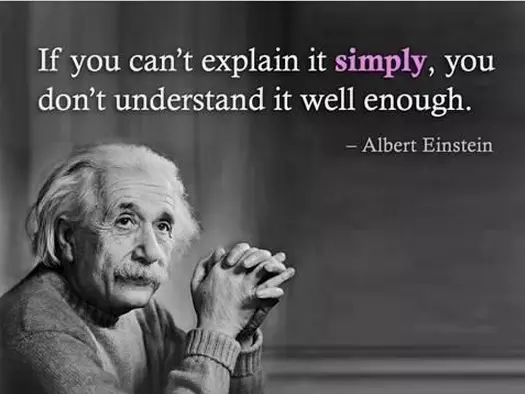
In this recent article on elearningindustry.com , the author, Christiaan Henney states that exams will be changing completely in the next 20 years as they do not reflect an employee's ability to do what is required in a job.  He suggests that knowledge is best measured alongside the learning and is demonstrated when employees carry out project work on the job.  Visible learning can be shown using multimedia e-portfolios.  Our learners should be encourage to explain concepts and learning in videos for example.    Einstein explained this concept succinctly:  
I long for the day when schools are able to shift their thinking away from preparing their learners for exams, toward preparing their learners for the future.  According to Dr Ruha Benjamin who I listened to in a keynote address at ISTE in Denver this year, schools are laboratories for social change.  
I think it is time for the change.
  

http://www.educationalleaders.govt.nz/Culture/Attitudes-values-and-ethics/Moral-purpose-and-shared-leadership
https://upload.wikimedia.org/wikipedia/commons/a/a8/Test_(student_assessment).jpeg

Sunday, 9 October 2016

A plea to all teachers exploring new digital technologies for computational thinking

I am fresh back from Ulearn.  My presentation there centred around what I had seen at ISTE (International Society for Technology in Education) in Denver this last June, compared to what I see happening in New Zealand and, the truth is, not much difference.
President Obama announced a new digital technologies curriculum in the US in January, and our own Minister of Education, Hekia Parata, announced the same, 6 months later here in NZ.  This is because both governments predict that in the near future there are many employment or commercial opportunities opening up for people with computational thinking skills.
So there has been a frenzy of robotics, coding and programming sales and promotion following up on those announcements, which was very noticeable in Denver but also here at Ulearn16.  There are Spheros and Ollies and Edisons and Little Bits and circuitry and AR (augmented reality) tools and VR (virtual reality) headsets and many other options available for teachers and schools who want to think about how to prepare for their digital technology curricula.
I have been trying to get my head around the difference between computational thinking and digital fluency.  Computational thinking is a way of thinking that can be used to solve problems.  Have a look at this excellent resource from Google. This screenshot from the ISTE video on Computational Thinking sums up the skills needed for computational thinking.
Digital fluency is the idea around the ease of use, speed, accuracy and comprehension of use of digital tools.  I have also been trying to get my head around the similarities and the convergence of the two concepts. You see, I have a fear that the new whizz bang technologies will become the interactive whiteboards of the future - ie not used mainly because the teachers didn't get or search out the professional development on how interactive whiteboards could be used to develop learning and/or did not pass the control of the learning power of the interactive whiteboards on to the learners.  What I mean is that, if teachers and leaders focus on learning how these things work and not letting the learners explore the possibilities in an appropriate context, then the whizz-bang things may be relegated to the back room top shelf where they cannot be destroyed by inquiring fingers.  And, yes, I have already heard of a full set of these devices being purchased and given to one department in a secondary school and stored away by that department because they did not use them.  Where was the planning and the cross-school consultation and decision making there?
So what to do?  According to this article from Beth Holland (Edutopia) the ultimate sign of technology fluency is the "ability to manipulate, transform and move information across various media and platforms" - definition supplied by Shawn McCusker.  This helps me understand the relationship between computational thinking and digital fluency.
So when you get home from Ulearn, loaded up with the Spheros, Ollies etc, give them out to your teachers, ask them to give them out to their students and for the LEARNERS to discover what they are and how they work and how they could be manipulated and transformed and translated into new outputs.  Let the learners inquire.  Report back what you find out about the power of computational thinking in your own professional inquiry and please share the stories.
And, ooops, I nearly forgot, here is a resource that you can use to teach computational thinking without a computer or device.

Wednesday, 28 September 2016

How to Thrive Online


I watched this (50 minute long) video of Howard Rheingold, cyberculture expert and academic, on How to Thrive Online.  He is the author of the book Net Smart which outlines 5 literacies that we need to not just survive, but to thrive online.  While not specifically directed to young learners, it does very much reflect the literacies that we all need online and so I think outlines the critical literacies that we need to continually teach our learners.
He calls these literacies  - attention, crap detection, participation, collaboration and network smarts.
Attention refers to the fact that digital technologies  are distracting but Rheingold claims that we can train ourselves to overcome distractions by attention to filtering what is useful and what is not.  He quotes Clay Shirky as saying there is no such thing as information overload - it is filter failure. History has taught us this has happened before when books first arrived on the scene.  We learned to cope with this overload by bringing in alphabetisation, indexes, subject headings, taxonomies, reference books, encyclopaedias, authors, critics, and editors.  So now we need to bring in new strategies to help us filter, and make conscious decisions to use them.
Crap detection is the next literacy (critical consumption is the polite term).  This teaches us how to recognise hoaxes and incorrect information.  We need to learn how to "search to learn", validate online sites by looking for authors, triangulate any information, seek multiple viewpoints (if no-one annoys you, you are in an echo-chamber).  Our learners find it hard to be critical consumers without learning those skills - this is where they need support to discard and bullying incidents, distinguish between what is real and what is opinion and grow all of the attributes of self worth as they do in real life.
Participation is about building your own online presence as a leader and he refers to Ross Mayfield's Power of Participation graph.

Collaboration is working together on a common purpose - build your community around this, and build networks rather than groups.  Groups are tightly knot whereas networks are a lot looser.  Use collaborative intelligence to work as a powerful group.  For example crowdsourcing how to solve a problem.   I am reminded of Alec Couros at ISTE talking about learner-led activism.  He gave us guidelines in how to find a good cause to support and lead on social media.
Finally the power of Network Smarts - be aware of the information that you post online, the person that you paint, the picture that you want others to see.  Our networks are in our pockets, and we should build on our social capital, our network capital.  We are more likely to get back if we contribute positively.
My question to you all is - are you thriving online?  Can you give me some examples of how your answer is illustrated?
Talks At Google. (2012, May 02). Howard Rheingold: "Net Smart: How to Thrive Online" | Talks at Google. Retrieved from https://www.youtube.com/watch?v=vajSK1jV56A

Tuesday, 20 September 2016

Teachers Stuck in a Tug of War

Having just watched Sir Ken Robinson's latest video about the need for a change in education, I am once again prompted to write about the urgency for understanding among educators in our schools and our society.   You see, leaders and teachers are stuck in a tug of war between educating our learners for the future and educating our learners for success in our standards driven system.  Listen to Sir Ken here.


Children are natural learners.  Sir Ken talks about children as natural learners and how "education" is at odds with this.  He thinks that school wears away at the curiosity of children, until they become disengaged and bored.
He thinks that the human factor has been removed from education due to the emphasis on competition, standardisation and testing.  He supports the involvement of a movement called GERM - global education reform movement - to remove the industrial element from education and replace with an organic one. He states that the GERM approach is "command and control" whereas he believes it should be about climate control - creating the right conditions for learning.

Our education system is like industrial agriculture.  His comparison of education to the industrialisation of agriculture - with the emphasis on yield and outputs having a resultant big price to pay (environment and soil erosion) - points to the idea that you need to get the natural process of teaching and learning right.  We have to create the optimal conditions in schools for each child to thrive as an individual, not as one of identical size, shape and colour.  We need a cultural climate for learning.

Leaders have a role to play.  As long as our society values results in standardisation, this will not change.  I have heard school leaders saying that they do not see the need to change because they are successful in terms of "results" - these being NCEA or national standard results.  They are traditional and that is what their parents want.  Parents want their children to be educated in the same way that they were and they want them to achieve well in standardised tests.  Sadly, the future will not look like it did for them.

Moral purpose:  I do believe that leaders need to think about the moral purpose of education, and start educating their school communities about the moral purpose of education, as well.   We need to prepare our learners to survive AND thrive in the future world.  Our learners need to develop their own personal strengths and passions so that they can find their place in the knowledge society.

Tuesday, 6 September 2016

Sharing - the Moral Imperative for Teachers

Along the same lines of the last post regarding Tweeting, this video of Dean Shareski doing an online keynote sharing is one of the most inspiring I have seen for a while.  He talks about teaching being sharing.  It is 25 mins long, well past the 10 min videos that I usually recommend but so many ideas relevant to teachers in today's' classrooms.  Please give it a watch if you have 25 spare minutes in your day.  Thanks to Viv Hall for sharing this video with me.  And thanks to Dean for sharing the keynote.