Pages

Thursday, 19 March 2015

An update on making a digital mihi using Google Maps

Some time ago, I made a video on how to make a digital "mihi" (a greeting and introduction of yourself and where you are from).  This was useful if you wanted to embed this in a google site or in a blog.  Google Maps have changed in appearance and functionality since then so here is a bit of an update.
In a traditional mihi, you usually say, in Maori, where your mountain is, where your river is, what your name is and other information about yourself.  It is a culturally placed protocol to establish links with the people you are introducing yourself to, and you can learn more about it here.
I think it is a nice and appropriate way to introduce yourself, particularly if you go into a lot of different schools as I do, but I also think that in an educational world, a digital mihi can be used for other purposes.  For example, students can be encouraged to make a digital mihi to introduce themselves on their blog.  It is a great way to help focus on improving writing for an authentic digital audience, in a culturally responsive way.
Students love to gather images and videos about their important places, and this makes their learning much more engaging.  It is relevant to them, and they are learning new skills and how to write for an audience.
One enhancement in a digital world may be to embed a sound recording of the student speaking their mihi in a blog or site, but a video is a pretty awesome way of doing this as well and so this method is for you to check out and use as you wish.  I hope you enjoy it.


Tuesday, 24 February 2015

Developing life-long learner skills

How do you become a life-long learner?  I was qualified and worked for some time as a microbiologist.  I then married someone who lived in the middle of nowhere and there were no jobs for microbiologists within a 100 mile radius.  But the local secondary school needed chemistry and science teachers, and so, I entered the teaching profession, without any training and I learned how to teach on the job.
This set me up for a lifetime of learning on the job.  My skills developed through need and, of course, I was putting in effort along the way.  As a chemistry and maths teacher, I kept thinking about better ways to teach the students, and attended professional development opportunities to help me improve.
I had previously thought that getting a degree in microbiology (and a post graduate diploma) would set me up for my working life, and that was all that I would need to be the most invaluable microbiologist in New Zealand.  I look back shamefacedly at that notion! Little did I know that knowledge was expanding at an exponential rate and whatever I knew back then, would be well out of date in five years.
As I moved into a senior management role at my school, the job description changed even more and now also included presenting and working with the staff.  As a classroom teacher, I had seen the development of the internet and digital technologies in education as opening up a whole new world for me and my students.  I started reading, watching and listening to as much as I could, and more importantly, started searching the internet for strategies using digital technology skills so that I could engage my students and deepen their learning.
 I looked for the "just in time" professional knowledge rather than the "just in case"  because there was so much to learn, it would have been overwhelming otherwise.  And so began the next stage in my learning journey. The age of the confident, connected, actively involved, lifelong learner had arrived.  I am confident because I know that the knowledge that I need is out there in the ethernet.  I am connected because I have expertise at my fingertips, and have professional learning networks I can tap into 24/7.  I am actively involved because I seek out new learning myself as I need it and give that learning back, whenever and wherever I see the opportunity. I am a lifelong learner because the journey never stops.

 I don't tell you this story to celebrate my success as a learner.  I tell you this story so that you can think about your own journey and how you become a lifelong learner so that your professional expertise is based on your own wants and needs in a changing world.  And I also tell you this story because your students need to know and understand it, as they enter a rapidly changing world.

The internet has changed the playing field for everyone.  So much knowledge and learning available for all.  If I want to learn how to copy and paste, I just google "how to copy and paste".  If I want to make a podcast, I just google "how to make a podcast".  There are instructional videos about everything and anything on youtube.  You can find out anything "just in time".  And that knowledge may be redundant in a years time, so be prepared for change.  Never have Heraclitus's words been more true - “Change is the only constant in life.”


Saturday, 21 February 2015

Do you have a class blog?

When you have a class blog, it is often about a "showcase" - showing your parents what their children are doing in class and celebrating their achievements.
If you are ready to take the next step, it can be very empowering for your students and will help them raise their literacy levels through more careful attention to correct grammar and presentation, with your guidance.
When you use student blogs in this way, it moves the blog from a "showcase" to a "process" portfolio.  Students make progress and are able to show their learning in an explicit way.  If you can encourage your parents to make positive comments and to extend the authentic audience for the students by letting their friends and relatives have the link as well, you will see great progess in student literacy achievement.
Not only will you be able to show learning, you will also be able to show evidence of students reaching the National Standards.  This will make the blog an "accountability portfolio."
You will need to make a decision about whether you want to check every post on the student blogs or whether you will do spot checks and address digital citizenship issues as they arise.  I prefer the latter because the students do need to learn to "live" in a digital world.
Teach the students how to comment positively on their peers blogs and you can also let your parents know what kinds of comments will help their child's progress.
If you have a class blog on Google Blogger and you want to add links to your students' blogs to the class blog, this short video will tell you how you can do this.
I would love to hear your stories of how student blogging has empowered you and your students in these ways.

Saturday, 31 January 2015

Recording my professional learning in one place

This year I have resolved to try to record my PLD (professional learning and development) a little more conscientiously, as I have ended up storing it all over the place in other years and it has been messy to retrieve. I have made a page on my 2015 Appraisal Site in order to do this. It looks like this.

I have a form on one side where I can enter the details of the PLD and the response spreadsheet on the otherside which includes links to the resources.  So far it has worked well as it is easy for me to open the site page and enter the information during the PLD session into the form but also view the previous PLD in the embedded spreadsheet.
If you are interested in this method, here is a video on how to do this.  I hope it is useful for you.


Sunday, 25 January 2015

Googling: Embedding a blog into your site

A couple of people have asked recently how to embed their blog into their site, so I have made this youtube tutorial of two different ways to do this.


If you want to see other tutorials, have a look in my youtube channel.  My videos are made in the traditional Flipping way - warts and all, so I hope they are of use to you.

Sunday, 4 January 2015

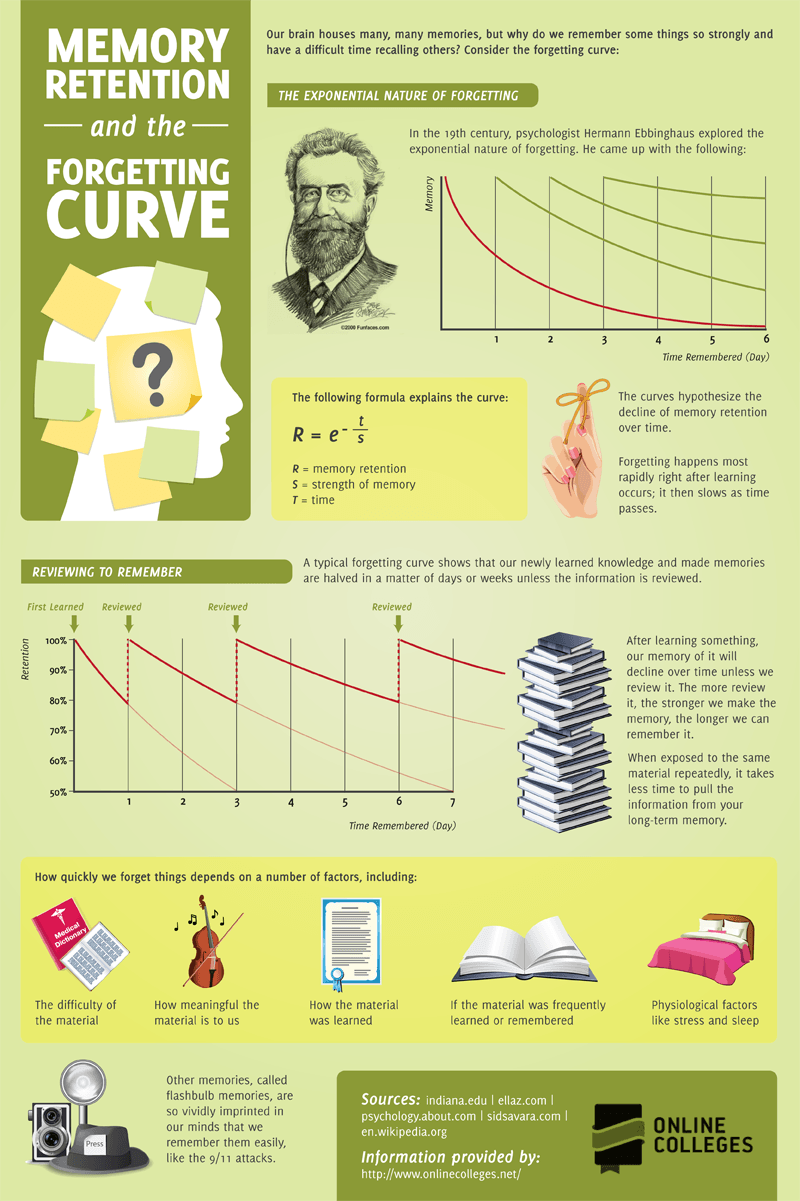
A great infographic from e-learning infographics which explains why flipping your class really works.

This great infographic reminds us of the importance of reviewing what we learn to be able to commit it to memory. This totally explains to me why videos are so good at helping us learn. We can stop, pause rewind, review a video, at our own pace. No teacher interruptions. If we have a video stored in a central place like on a site, this adds to the benefit as we are able to review regularly. Enjoy! Memory-Retention-and-the-Forgetting-Curve-Infographic
Find more education infographics on e-Learning Infographics

Wednesday, 10 December 2014

Principals and their Very Necessary Involvment in the Professional Learning and Development of their Staff

In 2014, I decided to conduct an inquiry into the involvement of principals in the professional learning and development project that I was facilitating in their schools.  I had found that in 2013, some principals were not active in the professional learning and development (PLD) that they wanted their staff to particpate in.  When this happens, some staff see the project as being of lower priority in the school.

I had about 30% active involvement of principals and decided I wanted 100%, so my inquiry was to see what I could do about it, as research had told me that the PLD would be more successful if principals were actively involved.  I decided to approach the principals and ask them to complete a checklist of indicators that they were actively involved.

This strategy had a twofold purpose:
  1. To alert the principals to the fact that they should be involved (even though the Memorandum of Understanding clearly stated they would be)
  2. To give principals some ideas of how they could be involved (because sometimes these things may be as clear as the big nose on your own face but not to others)
Principals were asked to help me with my inquiry by assessing their own degree of involvement and also adding any other factors that they could think of that would indicate that they were involved.  
There were unexpected outcomes.  As I watched some principals complete the checklist, I saw them waver as they filled out the sheet.  They WANTED to check the indicators positively but they knew they had not , in all honesty, done what they indicator had suggested. But they went ahead and checked it anyway!  And then they started doing it from that point on!  

So I suddenly became aware that some principals need a little help in meeting success criteria.  They need to know what is expected of them spelt out in black and white.  This year, I had over 80% active involvement by principals in the PLD.  A big improvement.

Principals also added some criteria to my original list and I am publishing this list of indicators so that it can be used by others working in schools in the same way that I do, and by principals if they wish to do a little self review on how well they are involved in PLDs in their school.

If you have a suggestion to add to the list, please do so by adding a comment below.  Here is the checklist: